Saturday, October 13, 2012

How MemStash can help you memorize anything!!

Throughout life Man will encounter situations where he comes across “something” outside of himself and there is a possibility that if he is able to absorb that thing into his being he may achieve growth. 

That something can be something abstract like an idea or something material like food.

As many of us already know learning is not as easy as eating a French fry. But on the other hand what we learn or don’t learn can decide what we can or can’t do later on in life! 

Memory is an important component of learning and the purpose of this article is to introduce the idea and a free method of memorizing using technology that we already use every day.

This particular technique exploits what is called Spaced repetition and is a learning technique that incorporates increasing intervals of time between subsequent review of previously learned material in order to exploit the psychological spacing effect.

Introducing MemStash, this is a FREE Online website.
Firstly you have to sign up for an account, after which they will tell you to drag a button to your browser. Once that is done you are set.(Don't worry there are pictures showing you what to do :))

How to use it: Whenever you come across anything you want to memorize, just highlight it on the web page using your mouse. Then click the "Stash This" bookmarklet, and MemStash will take care of the rest. 
You'll get three reminders via email or SMS within 10 minutes, 24 hours, and 7 days to remind you of it. 
All you then have to do is spend some time memorizing the material at those intervals and you will see that it sticks more easily than your earlier attempts at memorizing.

You can click on the picture below to sign up too.
MemStash

Thursday, October 4, 2012

The Science behind Stories and their Impact

If I dip my finger three times in wax, does that make me a candle?


What is the aim of a masonic ritual?
Basically what it does is just tell a story.
After listening to this story the person who hears this story is encouraged to reflect on it - in his own time and manner and take away from the experience something that he finds valuable.

Neuroscience has discovered that we can change behaviours by changing brain chemistry. How do we change brain chemistry?
The easiest way to change brain chemistry is by giving the person some drugs. But since most of us are not licenced practitioners of medicine that option is out. What neuroscientists have discovered is that depending on the emotional state that is created in the mind, different chemicals are released in the human brain. Emotional states can be created by various means. Luckily for us there are ways of increasing those very chemicals in the human brain through other means.
The five senses afford their own means of touching the mind from the confines of the physical world.
  • Vision: Painters and artists know the effect their painting - a visual stimulus, can have on the emotional state of someone who views their art[1].
  • Hearing: Listening to music is one method. Sad music can make people feel sad [2].
  • Smell: The oldest part of the brain and also the least understood but at the same time the most potent in its ability to induce and maintain emotional states. Everyone who have ever dabbed a drop of perfume will attest to the importance it has in elevating one’s mood.[3][4]
  • Taste: The old adage “The way to a man’s heart is through his stomach” holds true today as it did at the time it gained currency. Scientist wanted to know if this was something that we learnt as we grew up or something that we were born with and did an interesting experiment among newborn children where they gave them plain water, sugar and lemon to taste and recorded their brain activity and facial expression. The results of the study showed that we humans are indeed born with a sweet tooth that pleases the mind.[5] Perhaps this is also the reason why human milk is sweeter than that from cows.[6]
  • Touch: The reason that our species has survived so far is because of the strong feelings this sense arouses among us. The therapeutic value in touch is also known as many people who have been on the hospital beds will attest that they felt less anxious when there was someone to hold on at the hospital bed side.[7]
But then most of us are not trained in the liberal art of music neither are we master chefs! What then is a method that most people can use? The easiest way of creating an emotional state in the mind of another is by talking to them. More particularly, telling them a story. Any of you, who have read bed time stories to a child, know how much it builds a bond between you and the child.

Behavioural scientist have also found that there are certain emotions that when triggered causes behavioural change.
Two of theses emotions are distress and empathy. These emotions led to the release of two chemicals cortisol and oxytocin respectively.
Cortisol is a stress hormone and is released in response to stress. This hormone helps us focus on the situation that is causing us stress.
Oxytocin is known as the love hormone and is associated with care, connection and empathy. If released this leads to a feeling of empathy with the situation and promotes bonding.

Freemasonry takes good men and makes them better through the telling of stories. The parroting of words does little to influence the mind of a person observing the proceedings, but the recruitment of as many of his senses as possible along with a certain atmosphere will definitely leave a lasting impression on the mind of any person.
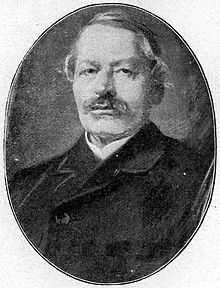
How does one create this atmosphere? By introducing the element of drama! Gustav Freytag[8] (1816 – 1895) was a German novelist and playwright. According to Freytag, a drama is divided into five parts, or acts, which some refer to as a dramatic arc [9]:
  1. Exposition: Some essential background information.
  2. Rising action: Obstacles that are encountered.
  3. Climax: The turning point of the story or the most dramatic part.
  4. Falling action: The pieces of the story falling into place.
  5. Dénouement: The conclusion where the conflicts are resolved and a sense of relief is gained from the untying of the plot.
Those of us who study the ritual on a deeper level will soon pick up those parts of the ritual where we need to incorporate these elements for maximum effect.

For reflection, I will leave you with some questions to ponder on.
Some ritual stories ‘impact’ us so much that we are changed by it.
Have you ever seen or heard such a story?
Have you ever been changed because of an experience?
Can you bring about such a change in an individual by telling them a story?

Bibliography

[1]     L. Pessoa, “To what extent are emotional visual stimuli processed without attention and awareness?,” Current Opinion in Neurobiology, vol. 15, no. 2, pp. 188–196, Apr. 2005.
[2]     J. K. Vuoskoski and T. Eerola, “Can sad music really make you sad? Indirect measures of affective states induced by music and autobiographical memories.,” Psychology of Aesthetics, Creativity, and the Arts, vol. 6, no. 3, pp. 204–213, 2012.
[3]     N. Gueguen, “EFFECT OF A PERFUME ON PROSOCIAL BEHAVIOR OF PEDESTRIANS,” Psychological Reports, vol. 88, no. 3c, pp. 1046–1048, Jun. 2001.
[4]     J. Ledoux, The Emotional Brain: The Mysterious Underpinnings of Emotional Life. Simon and Schuster, 1998.
[5]     N. A. Fox and R. J. Davidson, “Taste-elicited changes in facial signs of emotion and the asymmetry of brain electrical activity in human newborns,” Neuropsychologia, vol. 24, no. 3, pp. 417–422, 1986.
[6]     O. Maller and R. E. Turner, “Taste in acceptance of sugars by human infants,” J Comp Physiol Psychol, vol. 84, no. 3, pp. 496–501, Sep. 1973.
[7]     P. Heidt, “Effect of therapeutic touch on anxiety level of hospitalized patients,” Nurs Res, vol. 30, no. 1, pp. 32–37, Feb. 1981.
[8]     “Gustav Freytag,” Wikipedia, the free encyclopedia. 03-Oct-2012.
[9]     “Dramatic structure,” Wikipedia, the free encyclopedia. 30-Sep-2012.

photo credits:

Werner Kunz via photopin cc
betta design via photopin cc
~jjjohn~ via photopin cc

Monday, October 1, 2012

Medieval Church Builders


Interesting, simple and insightful 4 min video on practical geometry used by Medieval Church Builders.

Friday, September 28, 2012

Quatuor Coronati Lodge - The Premier Lodge of Masonic Research


The Legend of the Quatuor Coronati

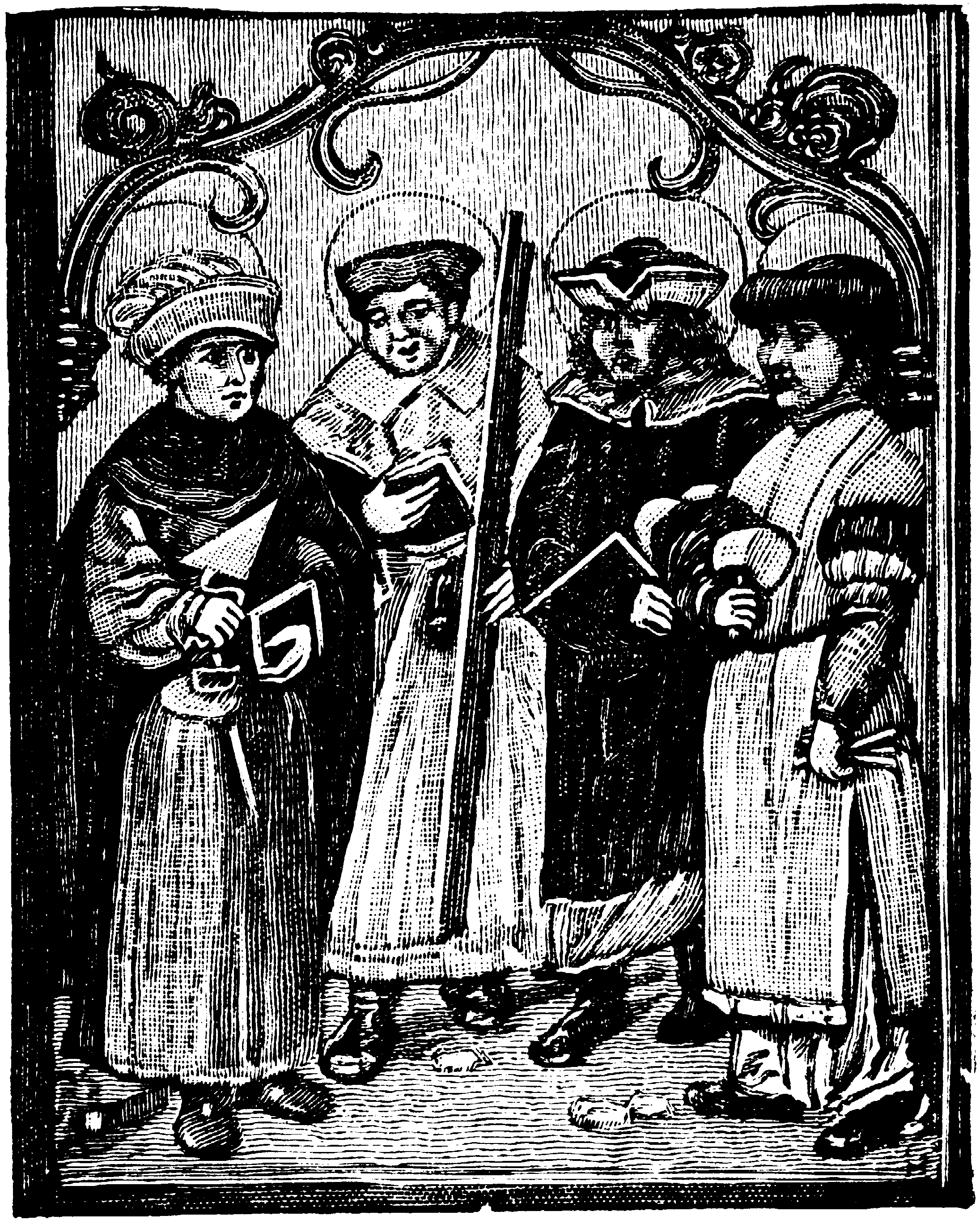
When in AD 298 the Emperor Diocletian was building his baths on the necks of the Quirinal and Virminal hills he included within its vast circuit a temple to Æsculapius, the god of health. He ordered the five sculptors, Claudius, Nicostratus, Sinforianus, Castorinus, and Simplicius to execute the decorative work and make the statue of Æsculapius.
Being Christians they refused to fashion the statue of a pagan god, and in consequence they were put to death on 8 November 298. Three were beheaded and two were scourged to death. Other artists were found who executed the work for the Emperor.
On the return of Diocletian to Rome in 300, finding the works completed, he issued an order for their dedication, and commanded that all the soldiers in Rome should be present, who, as they marched past, were to throw incense over the altar of Æsculapius.
As soon as this command was propagated, four brothers, who were master masons, and held the position of Corniculari, or wing-leaders of the city militia, met to decide what they should do under the circumstances. 
 These brothers were named Severus, Severianus, Carporferus, and Victorianus, who, besides being Masons, had embraced the Christian faith. They all agreed to abstain from throwing the incense over the altar, it being against their principles to assist in any way at pagan ceremonies of a religious nature. This determination they made known to their centurion, who communicated it to the tribune, Lampadius, who reported the matter to Diocletian. The Emperor ordered them either to sacrifice or suffer death. They, steadfast to their faith, suffered death by being scourged with leaden thongs. Their bodies were then enclosed in leaden cases and thrown into the river Tiber.
A brother, Nicodemus, recovered their bodies from the river, and they were interred by the side of the five sculptors previously martyred, and other saints, in the catacombs on the Via Labricana, which from the four Master Masons are to this day known as the Catacombs of the Quattro Coronati.

Source: S. Russell Forbes, Rambles in Rome, (1882), p. 196.


The following passage is taken from their website:
    The Quatuor Coronati Lodge, No. 2076 (United Grand Lodge of England). was founded in 1884 by nine Brethren who were intent on using an evidence-based approach to the study of Masonic history and research into Freemasonry.
    This innovative approach was intended to replace the imaginative writings of earlier authors on the history of Freemasonry. This new style and approach was later to be referred to as the ‘authentic school’ of Masonic research.
    The Founders planned to develop an interest in research among Brethren everywhere, to have papers read and discussed in Lodge and published in its transactions: Ars Quatuor Coronatorum (AQC). The Lodge thus hoped to attract the attention and enlist the cooperation of Masonic scholars in all parts of the world.
    Quatuor Coronati Lodge, the Premier Lodge of Masonic Research, continues today to work to the standards laid down in 1884 and we strive to maintain the high quality of research and discussion established at our foundation.
Those who would want to download some of the proceedings of the AQC can do so using this link.

Wednesday, September 19, 2012

Allegory

The dictionary defines an allegory as a representation of an abstract or spiritual meaning through concrete or material forms; figurative treatment of one subject under the guise of another. (1)
Allegory


In an allegory the idea is expressed using symbolic figures, actions or words.

It takes its origin from around the year 1350 Originally ‘allegorie’ from the Latin allēgoria or Greek allēgoría.  It is a derivative of allēgoreîn ‘to speak so as to imply something other’.


The Pilgrim's Progress (2), by John Bunyan, is a famous allegorical book.
In it the character named Christian struggles to escape from a bog or swamp. The story of his difficulty is an allusion to the difficulty of leading a good life in the “bog” of this world. The “bog” is a metaphor or symbol of life's hardships and distractions. Similarly, when Christian loses a heavy pack that he has been carrying on his back, this symbolizes his freedom from the weight of sin that he has been carrying.
Pilgrim's Progress

Bibliography


  1. Allegory. Dictionary.reference.com. [Online] [Cited: Sept 19, 2012.] http://dictionary.reference.com/browse/allegory.
  2. Bunyan, John. The pilgrim's progress. s.l. : John Murray, 1839.


Photo credits:


  1. "Allegory": jaci XIII via photo pin cc
  2. "Pilgrim's Progress": failing_angel via photo pin cc

Tuesday, September 18, 2012

The Best FREE Cultural & Educational Media on the Web


"The study of the Liberal Arts, that valuable branch of education, which tends so effectually to polish and adorn the mind, is earnestly recommended to your consideration;"


Towards this end take a look at this treasure trove of Free Learning Material from a website known as Open Culture where you can find the following material for free: 


Or if you prefer just the essentials:

Could A Freemason Be President Today?

Interesting article!! Please click on the line below to read the full article.

Could A Freemason Be President Today?


What reasons can you give for this?
Are Freemasons not interested in politics any more?
Is politics too dirty for a Freemason?
What do you say?