"...the sacred dictates of Truth, of Honour, and of Virtue.
What does Honour mean?
Showing posts with label Freemason. Show all posts
Showing posts with label Freemason. Show all posts
Tuesday, May 31, 2016


Wednesday, May 25, 2016
The Ritual Experience - Are you the hero in your masonic journey?
Does your masonic journey
have parallels with
the heroes of ancient myths?
have parallels with
the heroes of ancient myths?

I found the analogy of the ordinary world and the 'special' world and the narrative that connects it especially captivating.
The keywords that struck me(I'm sure there are more) were -
- Mysterious,
- assistance,
- wiser,
- crosses the threshold,
- trials,
- escapes,
- approach,
- ordeal,
- crisis,
- darkest hour,
- death,
- reborn,
- special recognition,
- return to the ordinary world,
- new life,
- experience that transforms you,
- symbolic.
Saturday, February 13, 2016
Tuesday, August 11, 2015
Freemasonry is

Freemasonry is
kindness in the home,
honesty in business,
courtesy in society,
fairness in work,
pity and concern for the unfortunate,
resistance toward evil,
help for the weak,
forgiveness for the penitent,
love for one another and, above all,
reverence and love for God.
Freemasonry is many things but,
most of all:
Freemasonry is a way of life.
It encourages good citizenship and political expression but is not a political organization.
Its charitable activities are manifold, yet, it is not a welfare or benefit organization.

Wednesday, October 9, 2013
Official Trailer of the 2013 movie - "The Freemason"
The Freemason - Movie Synopsis
A wealthy banker lies ritualistically and brutally murdered.
The banker's daughter and only heir, Rana (Alex McKenna), calls upon Cyrus Rothwell (Randy Wayne), a brilliant but eccentric freelance writer, to assist in the investigation.
Teaming up with veteran homicide detective Leon Weed (Sean Astin), they suddenly find themselves thrust into the cryptic world of Freemasonry- pitted against a killer searching for a legendary relic, shrouded by hundreds of years of myth and mystery. Freemasons Sheldon Lombard (Richard Dutcher) and Jericho Beck (Joseph James) decide to help Cyrus while teaching him about Masonic history, Rothwell's troubles multiply as he deduces the killer is one of the banker's close inner circle. With an inheritance of millions hanging in the balance, everyone is a suspect and every action perceived as motive. Rothwell's path becomes even more cloudy as his relationship with the beautiful heiress dances on the edge of charm and collusion. Cyrus begins to realize that if he does not solve the case soon he might be the next victim.
Cyrus is forced to come to grips with powers beyond his natural senses as well as his own mysterious past ties to Freemasonry in order to unmask the killer before they strike again.
Here is the trailer:
A wealthy banker lies ritualistically and brutally murdered.
The banker's daughter and only heir, Rana (Alex McKenna), calls upon Cyrus Rothwell (Randy Wayne), a brilliant but eccentric freelance writer, to assist in the investigation.
Teaming up with veteran homicide detective Leon Weed (Sean Astin), they suddenly find themselves thrust into the cryptic world of Freemasonry- pitted against a killer searching for a legendary relic, shrouded by hundreds of years of myth and mystery. Freemasons Sheldon Lombard (Richard Dutcher) and Jericho Beck (Joseph James) decide to help Cyrus while teaching him about Masonic history, Rothwell's troubles multiply as he deduces the killer is one of the banker's close inner circle. With an inheritance of millions hanging in the balance, everyone is a suspect and every action perceived as motive. Rothwell's path becomes even more cloudy as his relationship with the beautiful heiress dances on the edge of charm and collusion. Cyrus begins to realize that if he does not solve the case soon he might be the next victim.
Cyrus is forced to come to grips with powers beyond his natural senses as well as his own mysterious past ties to Freemasonry in order to unmask the killer before they strike again.
Here is the trailer:
Saturday, September 14, 2013
Charity extends beyond the grave
"Faith may be lost in sight; Hope ends in fruition; but Charity extends beyond the grave, through the boundless realms of eternity."
Tuesday, August 27, 2013
A Funeral for a Masonic Lodge

A new Worshipful Master in a small town spent the first four days making personal visits to each of the members, inviting them to come to his first Lodge meeting.
The following Thursday the Lodge was all but empty.
Accordingly, the Worshipful Master placed a notice in the local newspapers, stating that, because the Lodge was dead, it was everyone's duty to give it a decent Masonic burial. The funeral would be held the following Monday afternoon, the notice said.
Morbidly curious, a large crowd turned out for the "funeral." In front of the Altar, they saw a closed coffin, smothered in flowers.
After the Chaplain delivered the eulogy, he opened the coffin
and invited his Brethren to come forward and pay their final
respects to their dead Lodge.
Filled with curiosity as to what would represent the corpse of a "dead Lodge," all the Brethren eagerly lined up to look in the coffin. Each "mourner" peeped into the coffin then quickly turned away with a guilty, sheepish look.
In the coffin, tilted at the correct angle, was a large mirror.
Remember the obligation we all took my brethren attend and
support your Lodge!!!!
----- Author Unknown
Monday, July 1, 2013
What would you do my Brother?
We have all come across a situation where we were in a position to help someone in need.
What have we done at those times?
In this video from ABC News's - What Would You Do show,
a man named Dominic Giamo shows us what he would do
What have we done at those times?
In this video from ABC News's - What Would You Do show,
a man named Dominic Giamo shows us what he would do
Notice how this young man follows the teachings of our gentle craft to the letter:
"To your neighbour, by acting with him on the square, by rendering him every kind office which justice or mercy may require, by relieving his necessities and soothing his afflictions, and by doing to him as in similar cases you, would wish he would do to you."
"To your neighbour, by acting with him on the square, by rendering him every kind office which justice or mercy may require, by relieving his necessities and soothing his afflictions, and by doing to him as in similar cases you, would wish he would do to you."
Wednesday, February 13, 2013
Freemasons: The Inside Story
A TV series called Freemasons: The Inside Story starts on March 4th 2013.
In its 26-part episodes it aims to expose the myths associated with the fraternity, look back at its history and ponder the role Freemasonry plays within the community.
Here is a trailer:
In its 26-part episodes it aims to expose the myths associated with the fraternity, look back at its history and ponder the role Freemasonry plays within the community.
Here is a trailer:
Sunday, October 14, 2012
Friday the 13th of October 1307 and the end of the Knights Templar

Friday the 13th is considered an unlucky day in most parts of the world. The origins of the connection between the number thirteen and ill fortune are many but the most common stemming from another Christian source, the Last Supper, at which Judas Iscariot was said to have been the thirteenth guest to sit at the table. (Judas later betrayed Jesus, leading to His crucifixion, and then hanged himself). This Christian symbolism is reflected in early Western references to thirteen as an omen of bad fortune, which generally started to appear in the early 18th century and warned that thirteen people sitting down to a meal together presaged that one of them would die within the year.
Brewer's Dictionary of Phrase and Fable[1] has entries for "Friday, an Unlucky Day" and "Thirteen Unlucky". Interestingly it says "Friday the Thirteenth: A particularly unlucky Friday”. Now it would stand to reason that if a black cat crossed my path on Friday the 13th then it would be considered more unlucky than if it hadn’t!
But it seems that Friday the 13th was indeed unlucky for the Knights Templar in 1307. It was on this day that King Philip IV of France ordered Templar Grand Master Jacques de Molay and scores of other French Templars to be simultaneously arrested. The arrest warrant started with the phrase : "Dieu n'est pas content, nous avons des ennemis de la foi dans le Royaume" ["God is not pleased. We have enemies of the faith in the kingdom"][2].Wikipedia mentions the events of the arrests, charges, and dissolution of the Knights Templar as follows[3]:

The Background: In 1305, the new Pope Clement V, based in France, sent letters to both the Templar Grand Master Jacques de Molay and the Hospitaller Grand Master Fulk de Villaret to discuss the possibility of merging the two Orders. Neither was amenable to the idea, but Pope Clement persisted, and in 1306 he invited both Grand Masters to France to discuss the matter. De Molay arrived first in early 1307, but Pope Clement was delayed for several months. While waiting, De Molay and Clement discussed charges that had been made two years prior by an ousted Templar. It was generally agreed that the charges were false, but Clement sent King Philip IV of France a written request for assistance in the investigation. King Philip was already deeply in debt to the Templars from his war with the Englishand decided to seize upon the rumors for his own purposes. He began pressuring the Church to take action against the Order, as a way of freeing himself from his debts.

The Event: On Friday, October 13, 1307 (a date sometimes spuriously linked with the origin of the Friday the 13th superstition) Philip ordered de Molay and scores of other French Templars to be simultaneously arrested. The arrest warrant started with the phrase : "Dieu n'est pas content, nous avons des ennemis de la foi dans le Royaume" ["God is not pleased. We have enemies of the faith in the kingdom"]. The Templars were charged with numerous offences (includingapostasy, idolatry, heresy, obscene rituals and homosexuality, financial corruption and fraud, and secrecy). Many of the accused confessed to these charges under torture, and these confessions, even though obtained under duress, caused a scandal in Paris. All interrogations were recorded on a thirty metre long parchment, kept at the "Archives nationales" in Paris. The prisoners were coerced to confess that they had spat on the Cross : "Moi Raymond de La Fère, 21 ans, reconnais que (J'ai) craché trois fois sur la Croix, mais de bouche et pas de coeur" (free translation : "I, Raymond de La Fère, 21 years old, admit that I have spat three times on the Cross, but only from my mouth and not from my heart"). The Templars were accused of idolatry.After more bullying from Philip, Pope Clement then issued the papal bull Pastoralis Praeeminentiae on November 22, 1307, which instructed all Christian monarchs in Europe to arrest all Templars and seize their assets.

The Aftermath: Pope Clement called for papal hearings to determine the Templars' guilt or innocence, and once freed of the Inquisitors' torture, many Templars recanted their confessions. Some had sufficient legal experience to defend themselves in the trials, but in 1310 Philip blocked this attempt, using the previously forced confessions to have dozens of Templars burned at the stake in Paris.With Philip threatening military action unless the pope complied with his wishes, Pope Clement finally agreed to disband the Order, citing the public scandal that had been generated by the confessions. At the Council of Vienne in 1312, he issued a series of papal bulls, including Vox in excelso, which officially dissolved the Order, and Ad providam, which turned over most Templar assets to the Hospitallers.As for the leaders of the Order, the elderly Grand Master Jacques de Molay, who had confessed under torture, retracted his confession. Geoffroi de Charney, Preceptor of Normandy, also retracted his confession and insisted on his innocence. Both men were declared guilty of being relapsed heretics, and they were sentenced to burn alive at the stake in Paris on March 18, 1314. De Molay reportedly remained defiant to the end, asking to be tied in such a way that he could face the Notre Dame Cathedral and hold his hands together in prayer. According to legend, he called out from the flames that both Pope Clement and King Philip would soon meet him before God. His actual words were recorded on the parchment as follows : "Dieu sait qui a tort et a pëché. Il va bientot arriver malheur à ceux qui nous ont condamnés à mort" (free translation : "God knows who is wrong and has sinned. Soon a calamity will occur to those who have condemned us to death"). Pope Clement died only a month later, and King Philip died in a hunting accident before the end of the year.With the last of the Order's leaders gone, the remaining Templars around Europe were either arrested and tried under the Papal investigation (with virtually none convicted), absorbed into other military orders such as the Knights Hospitaller, or pensioned and allowed to live out their days peacefully. By papal decree, the property of the Templars was transferred to the Order of Hospitallers, which also absorbed many of the Templars' members. In effect, the dissolution of the Templars could be seen as the merger of the two rival orders. Some may have fled to other territories outside Papal control, such as excommunicated Scotland or to Switzerland. Templar organisations in Portugal simply changed their name, from Knights Templar to Knights of Christ – see Order of Christ (Portugal).

The problem with ascribing the origin of the superstition to this event is that this event was not a big deal to most of the world at the time (except to the Knights Templar of course!). Some scholars are now convinced the stigma is a thoroughly modern phenomenon exacerbated by 20th-century media hype.[4]
Bibliography
[1] E. C. Brewer and J. Ayto, Brewer’s Dictionary of Phrase and Fable. Orion Books Limited, 2007.
[2] C. G. Addison, The History of the Knights Templars. Cosimo, Inc., 2007.
[3] “Knights Templar,” Wikipedia, the free encyclopedia. 12-Oct-2012.
[4] “Why Friday the 13th Is Unlucky,” About.com Urban Legends. [Online]. Available: http://urbanlegends.about.com/cs/historical/a/friday_the_13th_4.htm. [Accessed: 13-Oct-2012].
[1] E. C. Brewer and J. Ayto, Brewer’s Dictionary of Phrase and Fable. Orion Books Limited, 2007.
[2] C. G. Addison, The History of the Knights Templars. Cosimo, Inc., 2007.
[3] “Knights Templar,” Wikipedia, the free encyclopedia. 12-Oct-2012.
[4] “Why Friday the 13th Is Unlucky,” About.com Urban Legends. [Online]. Available: http://urbanlegends.about.com/cs/historical/a/friday_the_13th_4.htm. [Accessed: 13-Oct-2012].
photo credit: teresia via photopin cc
photo credit: Svadilfari via photopin cc
photo credit: neilalderney123 via photopin cc
photo credit: Harvard Avenue via photopin cc
Tuesday, August 28, 2012
Mahabali - The story of Onam
Mahabali – The Story of Onam
“As he was pushed down into the netherworld (Collins English Dictionary, 2012), King Bali made a last request. He requested that he be allowed to visit Kerala once in a year to ensure that his people were still happy, well fed and content. Lord Vishnu was pleased to grant Mahabali his wish.” (Kulkarni, 1992) Thus was born the myth that every year on Onam day, Mahabali comes back to visit his subjects. The natives of Kerala celebrate this reminiscent of a time when Mahabali ruled over them and this is aptly portrayed in the lyrics of the following song.
Click here to listen to the Maveli Song Video
Click here to listen to the Maveli Song Video
 "Maveli nadu vanidum kalam
manusharellarum onnupole
amodathode vassikkum kalam
apathangarkkumottilla thanum
adhikal vyadhikal onnumilla
bala maranangal kelkkanilla
kallavumilla chathiyumilla
ellolamilla poli vachanam
kallapparayum cheru naziyum
kallatharangal mattonumilla "
When Maveli, our King, rules the land,
All the people form one casteless race.
And people live joyful and merry,
They are free from all harm.
There is neither theft nor deceit,
And no one is false in speech either.
Measures and weights are right,
No one cheats or wrongs the neighbor.
When Maveli, our King, rules the land,
All the people form one casteless race.
But there is a hidden element of masonic significance to this story.
It is related to the events leading to his exile to the underworld.
The story begins thus:
Mahabali also known as Bali or Māveli was a benevolent Asura(demon) king. The story goes that the present day state of Kerala in India witnessed its golden era in the reign of King Mahabali. However, unlike the usual Asuras he was very religious, was respectful to priests and like his grandfather (Prahlada), was one of the greatest devotees of Lord Vishnu. Mahabali was greatly respected in his kingdom and was considered to be wise, judicious and extremely generous. It is said that his subjects were happy in the kingdom; there was no discrimination on the basis of caste or class. There was neither crime, nor corruption. People did not even lock their doors, as there were no thieves in that kingdom. There was no poverty, sorrow or disease in the reign of King Bali.

Seeing his influence increase the lesser gods petitioned Vishnu to put an end to his reign as they felt threatened by it. Vishnu on his part assumed the incarnation of a Brahmin dwarf and approached Mahabali for a gift of three paces of land.
Mahabali being a generous person, agreed without a second thought. On learning of the event, Mahabali's preceptor, Shukracharya (who had visions of the future) told Mahabali that the one who had come to take alms from him was not an ordinary Brahmin but Lord Vishnu Himself. He advised Mahabali not to promise the lad anything. But Mahabali was a king who would never go back on his word, considering it sinful to do so.
Mahabali being a generous person, agreed without a second thought. On learning of the event, Mahabali's preceptor, Shukracharya (who had visions of the future) told Mahabali that the one who had come to take alms from him was not an ordinary Brahmin but Lord Vishnu Himself. He advised Mahabali not to promise the lad anything. But Mahabali was a king who would never go back on his word, considering it sinful to do so.
Mahabali's refusal angered Shukracharya. He cursed Mahabali, saying: “As you have not heeded your Guru's words, you will be reduced to ashes”. Mahabali told his Guru: "Prana (life) and Maana (honour) are like the two eyes of a person. Even if life goes, honour should be protected. Knowing that the person that has come now is the Lord Himself, I should be the most fortunate one as the Lord, who gives everything to mankind, is seeking something from me."
When Mahabali decided to accept Vamana’s request Vamana grew in size until he towered above the heavens. With one footstep, he measured all of the earth. With the second, he claimed all of heaven. There was still one foot of territory that Mahabali owed him. Mahabali requested Vamana to place the final step on his head as the third step of land, for he had no other left. Vamana did so and in doing so, pushed him down to Patala, the netherworld.
As a parting gift, Mahabali was granted permission to visit his subjects once a year. Thus, natives of Kerala the world over celebrate the Onam festival to commemorate the memory of the Great King Mahabali who would keep his promise to visit. Mahabali fulfilled his name as the great martyr for the sake of Truth ("Satya"). The name "Mahabali" itself means Great Sacrifice.
Does this theme strike a chord with the Mason inside you? It did with me. I am reminded of a familiar passage from the third degree:
“Such, my Brother, are the peculiar objects of the Third Degree in Freemasonry: They invite you to reflect on this awful subject; and teach you to feel that, to the just and virtuous man, death has no terrors equal to the stain of falsehood and dishonour. Of this great truth the annals of Masonry afford a glorious example in the unshaken fidelity and noble death of our Master Hiram Abiff, who was slain just before the completion of King Solomon's Temple, at the construction of which he was, as no doubt you are well aware, the principal Architect.” (Craft Freemasonry, 1997)
Is it not striking that the theme of the Hiramic legend is in total harmony with this King who would rather die than betray the trust placed in him once he has given his word? Let us all resolve this Onam to remember amid the festivities and revelry that greatness is not something that is earned but is freely given; only to those Men who have let go of the ego and immersed themselves in devotion to the Almighty.
I further speculate that perhaps Mahabali was a Freemason (at heart), because he practiced a certain truth that we Masons highly value – the value of a Man’s word and his honour.
Works Cited
Collins English Dictionary. (2012, August 28). 10th Edition. Retrieved from Dictionary.com: http://dictionary.reference.com/browse/nether world
Craft Freemasonry. (1997). Craft Ritual Book (Indian) (Seventeenth Edition ed.). New Delhi: Grand Lodge of India.
Kulkarni, S. D. (1992). The Epics Ramayana and Mahabharata.
Bibliography
Collins English Dictionary. (2012, August 28). 10th Edition. Retrieved from Dictionary.com: http://dictionary.reference.com/browse/nether world
Craft Freemasonry. (1997). Craft Ritual Book (Indian) (Seventeenth Edition ed.). New Delhi: Grand Lodge of India.
Kulkarni, S. D. (1992). The Epics Ramayana and Mahabharata.
Sunday, February 19, 2012
A Freemasonic perspective on Alcohol - Water into wine
This naturally got me curious. Was is something we were doing wrong back at home? Or was this some American innovation that I was experiencing? Not being one to sit around with doubts for a long time, I decided to find my own answers. I knew from experience that, to get answers - you need to ask questions. Although asking questions was not something most people enjoyed doing as sometimes they might come across answers that they did not like. I was determined however that this was something worth looking into.
 My most favorite charge - the charge after initiation rang in my ears "As a Freemason, let me recommend to your most serious contemplation the Volume of Sacred Law; charging you to consider it as the unerring standard of truth and justice and to regulate your actions by the divine precepts it contains." It was clear to me that I needed to study the Bible to arrive at the truth of this matter. Therefore I began a systematic study of what the Bible had to say regarding the use of alcohol.
The Wedding at Cana
1On the third day there was a wedding at Cana in Galilee, and the mother of Jesus was there. 2Jesus also was invited to the wedding with his disciples. 3When the wine ran out, the mother of Jesus said to him, “They have no wine.” 4And Jesus said to her,“Woman, what does this have to do with me? My hour has not yet come.” 5His mother said to the servants, “Do whatever he tells you.”
6Now there were six stone water jars there for the Jewish rites of purification, each holding twenty or thirty gallons.a 7Jesus said to the servants, “Fill the jars with water.” And they filled them up to the brim. 8And he said to them, “Now draw some out and take it to the master of the feast.” So they took it. 9When the master of the feast tasted the water now become wine, and did not know where it came from (though the servants who had drawn the water knew), the master of the feast called the bridegroom 10and said to him, “Everyone serves the good wine first, and when people have drunk freely, then the poor wine. But you have kept the good wine until now.” 11This, the first of his signs, Jesus did at Cana in Galilee, and manifested his glory. And his disciples believed in him."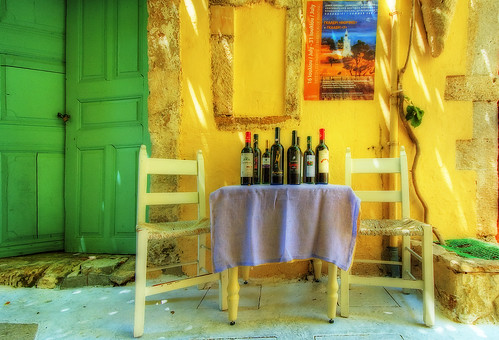
So now I needed to clarify - Did Jesus turn the water into wine (alcoholic) or into grape juice (non-alcoholic)? I went deeper into the text of the matter, and I found that the original word in Greek we translated into English as "wine" is oinos. This was the common Greek word for alcoholic wine. As I researched this topic I realized that some people would like to claim that oinos was actually just grape juice because Jesus would never give people wine to drink (Oh no!!) but that is clearly not the case because it is the same word oinos used in Ephesians 5:18, "...18And do not get drunk with wine, for that is debauchery,..." Clearly, one can get drunk from drinking only alcoholic wine and not grape juice!

So there you have it. Not only did Jesus perform the miracle of turning water into wine he also made around 20-30 gallons of it in one shot!! So its not like he went for a party and took along a bottle of wine for the host. He made enough for the entire crowd at the wedding. This raised another question in my mind. Was Jesus giving everyone an unlimited drinks pass? Not at all according to me just because God gives us something freely does not give us a licence to abuse it!! Just like every other thing in life that the Almighty has provided for our nourishment, too much of it can be detrimental to our health. Here again our ritual teaches us regarding The cardinal virtues "As an individual, let me recommend the practice of every domestic as well as public virtue: let Prudence direct you, Temperance chasten you..."
So I learnt two things ultimately - that drinking alcohol is not a sin as long as it used with restraint or temperance. This exercise also intrigued me to find out what the bible says on alcohol. More on that in my apologetics blog.
Thursday, September 1, 2011
Daily Advancement in Masonic Knowledge

Daily Advancement in Masonic Knowledge
The title of this essay is taken from one of the most beautiful charges in the Masonic ritual - the charge after initiation, wherein the newly initiated brother is exhorted among other tasks to make a daily advancement in Masonic knowledge.
Let us examine this significant remark a little further. Firstly let us make note of the fact that he is asked to make this a daily activity. Secondly he is told to acquire Masonic knowledge.
There was once a scientist named Pavlov who was interested in studying how humans learn. He conducted an experiment which made inroads into the understanding of learned behaviors. We all know that ringing a bell cannot make a dog salivate. But this is what he proved was possible. Every day during the time when the dog was fed, he started ringing a bell and then feeding his dog. As usual the dog would salivate when it saw the food. Eventually there reached a point where as soon as the bell was rung he started to salivate as he was used to the habit of receiving food just after the ringing of the bell. This experiment proved that certain responses were natural and we can link those in the mind to certain stimuli in order to get a behavior that we require. This is the basis of learned behavior. For example, when our child receives a favor from someone the first time he may not say thank you as an instant reaction but if we ensure that our child says thank you consistently to such kind acts from a fellow human being, he will make it a habit and it will make him a more pleasant and agreeable person in this world.
Man is a social animal. Therefore there are many learned behaviors that he can acquire. When he has acquired the required behaviors he is considered a fit and proper member of regularly organized society. In all cases good behaviors can only be developed after the mind knows what behavior to exhibit. The mind can know what behaviors to exhibit only after it has been taught. This is known as cultivation of the mind. Such a cultivated mind can only be attained by practicing “learning” until it has become a habit in daily life.
This is also the reason why we are taught to reflect on the rough and perfect ashlars. They teach us that the rough and unformed mind of the man in infancy needs to become the mature and polished mind by education and experience. Here if we look closely at it we see that learning is on two levels, on one level its education or that knowledge that can be acquired by reading and studying books-theoretical knowledge and on the next level we can learn by practicing what we have learnt in the book in real life-practical knowledge.
To sum up so far we have arrived at the conclusion that we need to learn both Masonic theory and practice Freemasonry in real life. Now let us examine the source of Masonic knowledge.
What is this Masonic Knowledge that a mason is to acquire? So where do we get this Masonic knowledge from? Is it the ritual? Is it the administration of the Lodge? Is it points of procedure and protocol? Is it the constitution? Is it Masonic etiquette? Is it religious in nature? Is it the historical in nature?
There is a line of thought that says the Mason's area of operation is from north to south, from east to west, from zenith to nadir, therefore ANY advancement in knowledge is an advancement in Masonic knowledge; And I agree that this is true in a broad sense. In my humble opinion it is anything that makes a man better than he is currently. From a ritualistic point of view anything that prepares him to climb the winding staircase of life that lies ahead of him is Masonic knowledge. But for the sake of regularity of discussion I would like to elucidate a few sources of Masonic knowledge before taking refuge in that line of thinking.
The sources that I wish to explore are:
- 1. The Three Great Lights in Masonry
- 2. The Ritual
- 3. The Book of Constitutions
- 4. The Moral Virtues
- 5. The Liberal Arts and Sciences
- 6. The Higher Degrees
The Three Great Lights in Masonry
1. The basic foundations of Masonic knowledge for all Freemasons are the three great lights in Masonry viz.
- 1. The Volume of Sacred Law,2. The Square and3. The Compasses
 The Volume of Sacred Law is an unending source of knowledge and we are charged to consider it as the unerring standard of truth and justice to regulate our actions by the divine precepts it contains. (”All Scripture is breathed out by God and profitable for teaching, for reproof, for correction, and for training in righteousness” - 2 Timothy 3:16) We are also told that in it we will learn the important duties we owe to God, our neighbor and our self. It is the volume of sacred law that Freemasonry holds in highest reverence and so should we. Proof of this comes from the “Aims and Relations of the Craft”, first issued by the United Grand Lodge of England, and later agreed to by the Grand Lodges of Ireland and Scotland which states: The first condition of admission into, and membership of, the Order is belief in the Supreme Being; the Bible, the Volume of the Sacred Law, is always open in Lodges. Every candidate is required to take his obligation on that book or the Volume that is held by his particular creed to impart sanctity to an oath or promise taken upon it. ”. The principles of the Fatherhood of God and the Brotherhood of man are derivations of what the volume of sacred law teaches us and therefore to advance in this direction we need to make diligent study of the volume of sacred law a part of our daily routine just as we brush our teeth daily.
 The Square is one of the most important and significant Symbols in Freemasonry. It is not the carpenter’s square (French freemasons) or a measuring implement (American Freemasons), it is simply the trying square of a stone-mason, and has a plain surface; the sides or legs embracing an angle of ninety degrees, and is intended only to test the accuracy of the sides of a stone, and to see that its edges subtend the same angle. In Freemasonry, the square is a symbol of morality. It is this morality that is the bedrock practical freemasonry and is a pre requisite for becoming a member (ref: Who can become a freemason?). But it has other contextual significations for example:
1. It presents itself to the Entered Apprentice as one of the Three Great Lights.
2. To the Fellow Craft as one of his Working-tools.
3. To the Master Mason as the official emblem of the Master of the Lodge.
The Compasses show us that we must direct our energy and efforts with all mankind, particularly among our brethren in Freemasonry. The knowledge that the compasses teach a mason is so mystical that it is difficult for the mortal mind to fully comprehend (w.r.t the deity) but on a more practical level it teaches man of his everyday duty of circumscribing his passions, and keeping his desires within due bounds. "Better is he that ruleth his spirit than he that taketh a city.”-King Solomon (Proverbs 16:32)
The Ritual
After the three great lights in masonry comes the Craft Ritual. This is akin to the Pierian Spring in Greek mythology.
As the metaphorical source of knowledge of art and science, it was popularized by a line in Alexander Pope's poem "An Essay on Criticism" (1709).
“…A little learning is a dangerous thing;
Drink deep, or taste not the Pierian Spring…”
Pieria, where the sacred spring was situated, was a region of ancient Macedonia, it was believed to be the home and the seat of worship of Orpheus and the Muses, the deities of the arts and sciences. The spring is believed to be a fountain of knowledge that inspires whoever drinks from it. In Greek mythology, it was believed that drinking from the Pierian Spring would bring you great knowledge and inspiration. Thus, Pope is explaining how if you only learn a little it can "intoxicate" you in such a way that makes you feel as though you know a great deal. However, when "drinking largely" it "sobers" you now that you are wise and have a greater understanding and also "drinking" it "largely sobers" you because you then realize that you may never acquire complete wisdom and understanding. On similar lines the knowledge of the ritual can grow in an individual who is inclined. Initially in may be due to admiration and novelty progressing onwards to devotion and love for it. Finally by personal study and repeated delivery we gain more insight into the meaning and see the effect it has on the candidate. When we attempt to master the ritual naturally we will begin to master the English language; its grammar, pronunciation, intonation and dialogue delivery skills. In addition to this we also start using our grey matter and like all muscles the more we exercise it the stronger it becomes and this helps us in our personal and private avocations too. Thus in each stage of knowledge development as a ritualist we grow and help others grow and come to realize how little we actually know and how much more we can improve as seen in the Pierian Spring analogy.
The Book of Constitutions
The efficient administration of the lodge which forms the basic unit of freemasonry is governed by the Book of Constitutions. It lays down the rules and regulations based on which we operate. It is therefore vital that a knowledge seeking freemason be well acquainted with it so as to enable him to be most useful in his lodge. Let us keep in mind the words that remind us of the importance we place on the Book of Constitutions “…a strict observance of our laws and regulations, by prompt attention to all signs and summonses, by modest and correct demeanor in the Lodge, by abstaining from every topic of political or religious discussion, by a ready acquiescence in all votes and resolutions duly passed by a majority of the brethren, and by perfect submission to the Master and his Wardens whilst acting in the discharge of their respective offices.”
The Moral Virtues
The very definition of Freemasonry is that “it is a system of morality, veiled in allegory and illustrated by symbols”, therefore it needs no mention that knowledge of morality is paramount and morality can be practiced through virtuous behavior is what our ritual points out viz. the four cardinal virtues of Prudence, Temperance, Fortitude and Justice and above these the virtues of Faith, Hope and Charity also known as the three theological virtues that our ritual highlights as the staves on Jacobs ladder making a total of seven virtues.
The Liberal Arts and Sciences
The conferment of degrees is one of the activities that occur in a tyled lodge room, akin to universities that confer the Bachelor or Master’s degrees. Hence it is but natural to wonder about the knowledge that one has to acquire in these fields that qualifies as Masonic knowledge. In Proverbs 9:1 Solomon says, "Wisdom hath built herself a house, she hath hewn her out seven pillars." The importance of gaining knowledge in these fields are discussed as follows:
1. Grammar: In Genesis, the first job given to Adam is to name all things. Adam is told to name them and to have dominion over creation. Knowing the name of things gives a man authority to speak and to understand. Grammar teaches us to speak clearly and concisely.
2. Rhetoric: A synonym for rhetoric is persuasion. To study rhetoric is to study speaking and writing to persuade others. Rhetoric adds force and elegance to our thoughts.
3. Logic: This teaches us the trains of thought that help us deduce or infer the facts. It trains the mind to think clearly.
4. Arithmetic: Managing numbers requires attention, skill and intelligence. Hence to be well versed in this science makes man wealthy figuratively and literally.
5. Geometry: Here we find the foundation of architecture the basis of the craft and in its depth we can sense the genius of the Almighty.
6. Music: Rhetoric appeals to the intellect which is second only to Music which persuades the heart. In studying this we truly appreciate the importance of timing and perseverance. On a spiritual level we understand the balance and harmony in all of creation through it.
7. Astronomy: The science that teaches us to look up at the starts and ultimately leads us to contemplate the magnificence and grandeur of the creator and the miniscule yet significant part we are in that great plan.
The Higher Degrees
After one has attained some proficiency in the Craft, some members are drawn to seek further enlightenment in their quest for that which was lost in the Higher or Side degrees. This eventually leads them to be advanced in Mark masonry and exalted in the Holy Royal Arch and elevated in the Royal Ark Mariners Degrees and dubbed in the Chivalric Orders. Although these degrees are optional, they are a treasure trove of further knowledge that will delight the heart and mind of those so predisposed. Many a time they will fill in gaps of knowledge that were hitherto blind spots in the Master Mason’s Lodge
.
In conclusion, each of these are sources of Masonic knowledge and it is left to the discretion of the brother to choose his area of growth. But like all knowledge it is useless unless it is applied aptly. “For the heart may conceive and the head may devise in vain if the hand be not prompt to execute the design.” Therefore once a daily advancement in Masonic knowledge becomes a habit will serve the new initiate well in his journey through the blue lodge and beyond.
Subscribe to:
Posts (Atom)